// Initialize Locomotive Scroll
Case Study

Veolia Umweltservice Nord GmbH

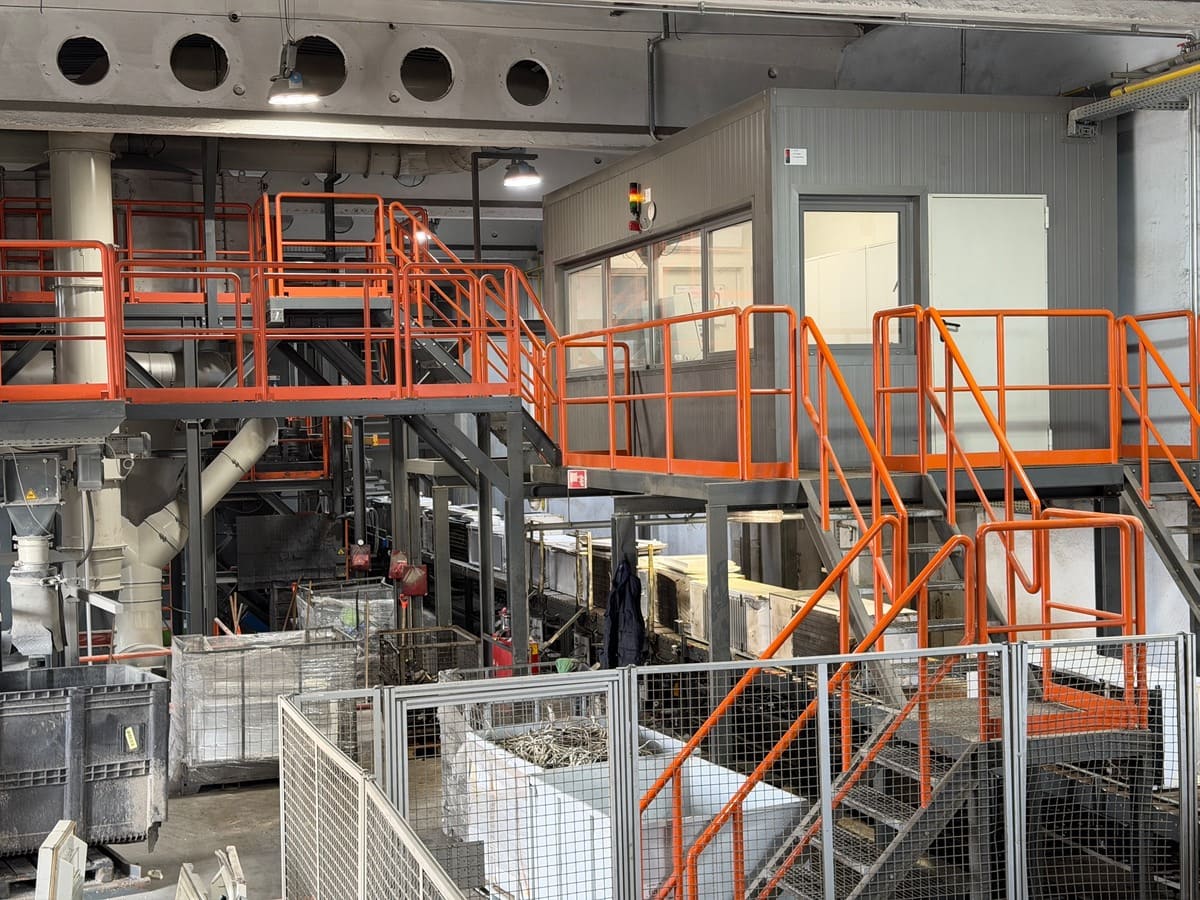
Veolia Umweltservice Nord GmbH operates an upgraded end-of-life refrigerator recycling plant at their Hannover facility, fundamentally re-engineered by URT. The former cryo-condensation system was fully replaced by a modern activated carbon-based blowing agent recovery system, ensuring compliance with current emission standards. The retrofit was executed within the existing building infrastructure with minimal downtime to ensure continued plant availability.

Key Facts:
  • Retrofit of an existing URT plant including full replacement of the former cryo-condensation system by activated carbon-based blowing agent recovery technology
Cooling Devices Recycling Plant for Veolia Umweltservice Nord GmbH by URT

Project Data

Client:
Veolia Umweltservice Nord GmbH
Location:
Hannover, Germany
Recycling Category:
Cooling Devices
Applications:
Household cooling devices
Plant Capacity:
2 t/h (approx. 50 units per hour)
Staff per shift:
approx. 4
Special engineering scope:
Retrofit of an existing URT plant including full replacement of the former cryo-condensation system by activated carbon-based blowing agent recovery technology
Shredding technology:
Four-shaft pre- and post-shredding
Blowing / cooling agent recovery:
each >90% (EN 50625-2-3)
Compliance:
WEEELABEX Certificate, TA-Luft

Project Description

Veolia Umweltservice Nord GmbH operates an end-of-life refrigerator recycling plant upgraded and modernised by URT. The facility is designed for the treatment of household cooling devices under continuous industrial operating conditions.

The plant, originally supplied by URT, was fundamentally re-engineered to meet updated regulatory requirements. A former cryo-condensation system was completely removed and replaced by a blowing agent recovery system based on activated carbon adsorption. The process concept was redesigned to ensure compliance with current emission limits and process standards.

The retrofit was carried out within an existing building and on an already installed plant. The upgrade required precise integration into the existing infrastructure and was executed within a short timeframe to minimise downtime and ensure continued plant availability.

Project Gallery

No items found.