Lithium-Ion Batteries

Highest Recovery Rates. Maximum Process Reliability. Flexibly Scaleable.
We develop and deliver recycling plants for lithium-ion batteries that combine safe depollution, high recovery rates and economically viable operation.
For more than ten years, plant concepts have been developed for a demanding material stream where safety requirements, regulatory frameworks and industrial process stability must be consistently aligned.
The result is modular and scalable solutions adaptable to different cell chemistries, throughput capacities and site specific conditions.
Facts and figures of our expertise
Recovery of Dry Black Mass
Years of Experience in Lithium-Ion Battery Recycling
Plants Delivered for Lithium-Ion Battery Recycling
up to 4 t/h Throughput achieved by our Lithium-Ion Battery Recycling Plants

Technology and Process
Lithium-ion batteries contain not only critical raw materials such as lithium, nickel, cobalt and manganese, but also flammable electrolytes, additives and complex cell chemistries. The safe recovery of these materials requires robust, precise and controlled processes.

0.
Discharging & Dismantling

1.
Inert Shredding

2.
Thermo-mechanical Drying
3.
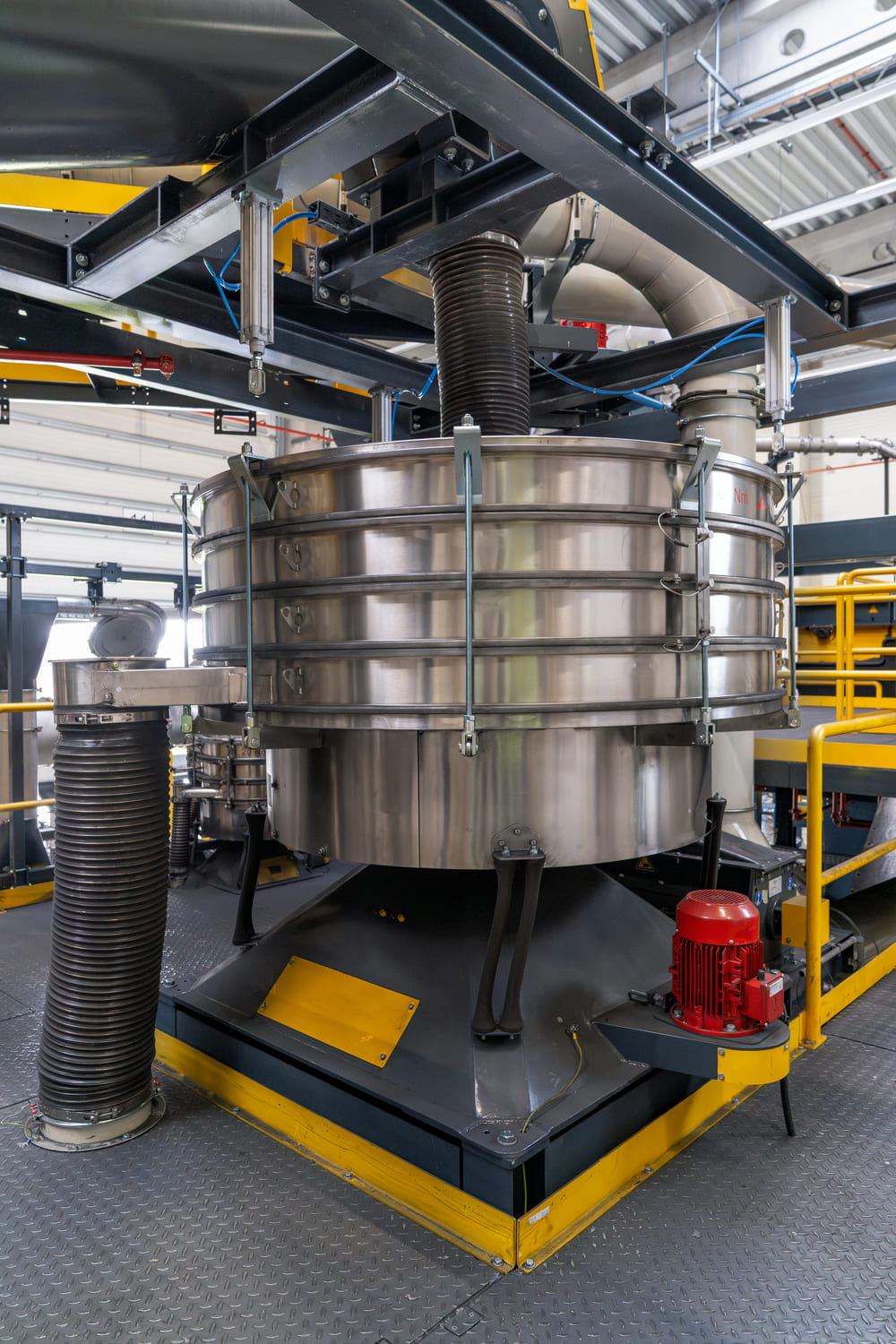
Sieving

4.
Black Mass Recovery

5.
Heavy and Light Separation

6.
Regenerative Thermal Oxidation
Key Advantages – Technical, Economical, Safe
Over 98% Recovery Rate of Black Mass
Thermomechanical processes in an inert atmosphere enable the recovery of over 98% of the dry black mass - including lithium, cobalt, nickel and manganese. This ensures access to strategically important secondary raw materials while improving economic recovery efficiency.
Maximum Operational Safety and Compliance (EHS)
URT plants meet all environmental, occupational and safety standards. Technical measures such as inertisation, explosion protection and closed material handling significantly contribute to plant availability and reduce the risk of costly downtime or maintenance interventions.
High Purity of Output Fractions
Precise mechanical separation processes enable clean separation of aluminium, copper, ferrous metals, plastics and other material streams, forming the basis for high output quality and flexible downstream processing.
Efficient Emission and Solvent Treatment
Volatile compounds such as electrolytes are evaporated under vacuum during thermomechanical drying, condensed and treated via exhaust air systems such as RTO. The systems are designed for minimal emissions and full regulatory compliance.
Process Know How from Industrial Practice
Process engineering design is based on a large number of successfully implemented international lithium-ion battery recycling projects as well as decades of experience in handling sensitive material streams. This ensures planning reliability and stable plant operation at all levels.
High Degree of Automation
The plants feature a fully integrated automation concept, covering material feeding, shredding, fractioning and drying through to exhaust air treatment. Process parameters such as material flows, temperatures, pressure levels, nitrogen supply and emission values are digitally monitored and documented. This ensures stable process control, reduces manual intervention and supports efficient plant operation.
Modular Design and Long Term Adaptability
The modular plant concept allows flexible adaptation to different input materials, cell chemistries and throughput requirements. Expandable process stages and a flexible system architecture ensure technical and economic viability even with increasing return volumes and changing regulatory frameworks. This protects investment and enables long term technological development.
Christoph Homann
RE.LION.BAT. Circular GmbH
.jpeg)


Applications
Lithium-ion battery recycling plants are designed for a wide range of input materials from industrial and consumer applications.
- EV Modules
- Cell Packs
- Cathode Foils
- Anode Foils
- Appliance Batteries
Services
We consult about, plan and build lithium-ion battery recycling plants – tailored to our customer’s business objectives and in compliance with local regulatory requirements.
Engineering and Commissioning
1.
Engineering
Every successful project is based on a thorough analysis of material flows, site conditions and all technical, economic and regulatory requirements.
More information2.
Design
We design efficient, safe and durable recycling plants tailored to the input materials and individual objectives.
More information3.
Commissioning
Manufacturing, installation and commissioning are handled by experienced specialists, followed by operator training to ensure safe, efficient and autonomous operation from day one.
More information
Maintenance and Upscaling
4.
After Sales & Support
Dedicated specialists provide on site and online maintenance, technical support, process optimisation and global spare parts supply to ensure high plant availability.
More information5.
Shredding Tech. & Cutting Units Support
We provide servicing and replacement of shredder cutting units, including rental solutions with short lead times.
More information6.
Further Consulting & Upscaling
We future proof recycling plants through strategic scaling, plant extensions and technical consulting for future requirements.
More information
Development of Our Expertise
From research initiative to industrially proven plants: since 2011, URT has systematically built its expertise in lithium-ion battery recycling and developed a technology with a recovery rate of over 98%.
Foundations
Starting point as a research initiative (LithoRec II project) with prototypes for controlled shredding under inert gas.
Pilot Plant
First pilot plant for a German OEM.
Industrial Application
First plants in Europe for industrial scale operation with a throughput of up to 4 t/h.
Large Scale Deployment
Delivery of one of Europe’s largest lithium-ion battery recycling plants.

Efficient recycling starts with the right plant.
Contact us to discuss your specific requirements.